
Interview with Lauren Ashley Carter

Interview with Lauren Ashley Carter originally published in VideoScope #105 Winter 2018
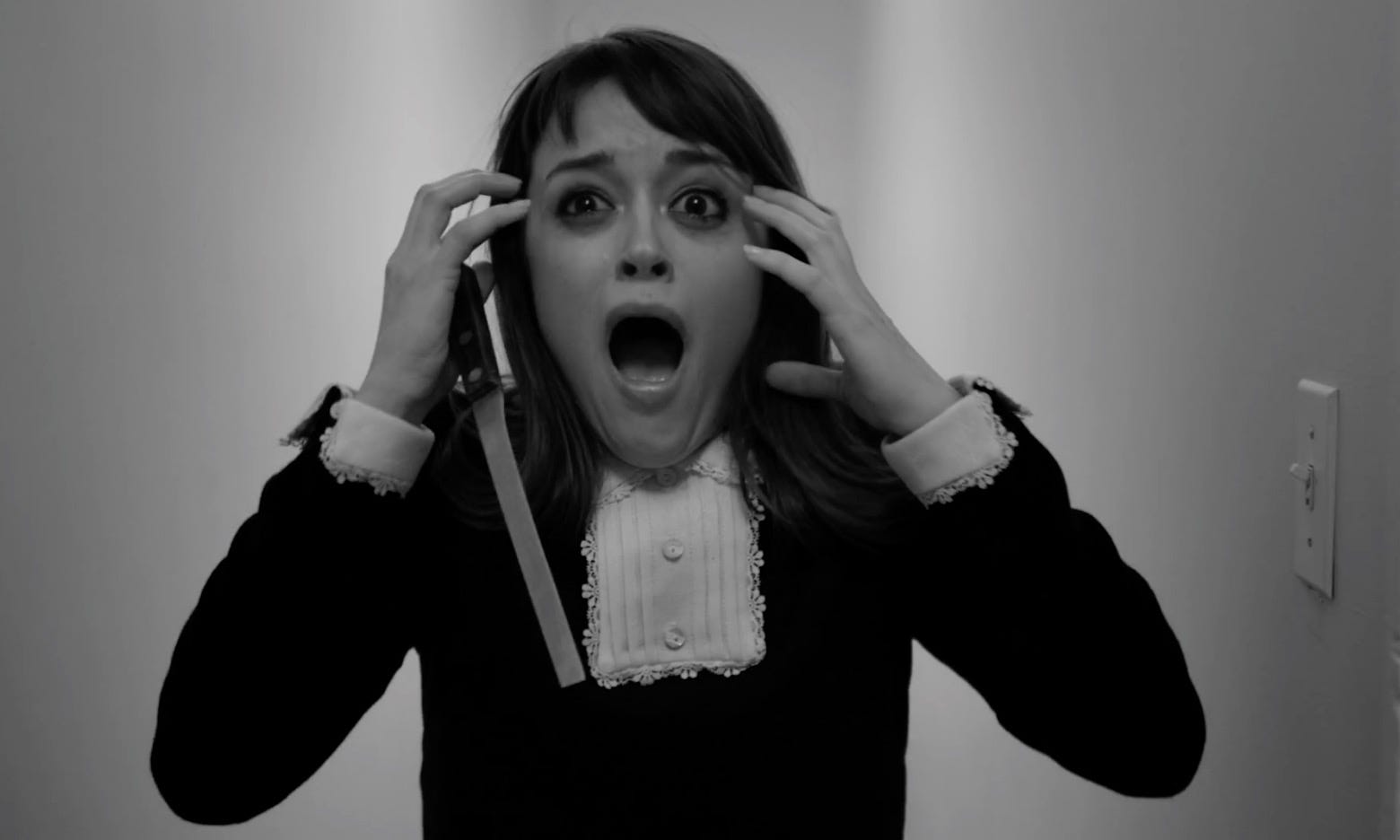
Acclaimed actor Lauren Ashley Carter is hailed as an up-and-comer, but those who’ve followed her career recognize an already prolific talent who’s barely grazed the surface of her potential. She’s accumulated a staggering body of work consisting of multi-dimensional characters like distraught Peggy Cleek in Lucky McKee’s vicious satire The Woman (2011); pregnant teen Ada in Chad Crawford Kinkle’s eerie cult film Jug Face (2013); psychokinetic Rachel Meadows in Joe Begos’s tongue-in-cheek telekinetic terror The Mind’s Eye (2015); the haunted namesake of Mickey Keating’s stark Darling (2016); and a dual role in Natasha Kermani’s upcoming existential sci-fi Imitation Girl (2017). Within these roles, she has demonstrated pronounced capability in embodying a broad range of diverse characterizations ranging from vulnerable to mysterious to absolutely savage. Carter has also stepped behind the camera as a producer and directed the short film Introducing Parker Dowd (2015), a comedic work inspired by New York City’s competitive performance world. Carter has proven she’s a creative force of nature through her onscreen work, and as an advocate for artists offscreen, has secured a place as one of the most important voices in independent cinema today.
CH: What was your creative life like growing up - did you know from an early age that you wanted to pursue acting?
LAC: As soon as I found out it was a thing you could do as a profession, I wanted to do it. It was funny, that moment you realize the people you’re watching in these movies, you find out it’s a job with scripts and all that. From a very young age I thought, ‘wow, how cool is that.’ As far as acting goes, that didn’t really take off right away. I started writing scripts. I really got interested in plays and I started reading a ton of plays. I started with Shakespeare at way too young of an age - I would read it and thought that I was really cool, but I don’t think I understood anything I was reading. I started writing plays for my classmates in second grade - I would run them down at recess and make them do my scripts! Anytime we had free time in class I would force the entire class to do my plays. I remember being very frustrated with the actors, with my friends who I didn’t think were giving my work the respect it deserved. I decided from then I would act in my own plays so I started acting in my own things I was writing.
CH: It’s troubling that in our political climate there are threats to the National Endowment for Arts and other programs because art is not seen as having value in our society. Where do you think you’d be now if you didn’t have art growing up?
LAC: It’s really challenging. For me, I was going to find it no matter what. I was going to try to educate myself and be there because I come from a family that loves art. They’re not artists by any means - they’re computer programmers and engineers - but they love it so much and I had that support from them. So many people don’t have that at home, they don’t prioritize it, but I think it absolutely saves lives in many ways. For me, I can’t do anything else; it is my life. I can’t imagine a life without it and I’ll try every way to fight for it as much as I can.
CH: How does being behind the camera inform what you do in front of it? Has it changed your approach as an actor knowing what the director or producer is going through?
LAC: There are times as an actor that you need some help or you want to talk to the director but you see them being very busy. You think, ‘oh well, I don’t want to bother them.’ Especially as a woman, I find myself very silenced by my own notions and my own fears of being called a ‘diva’ or being needy. It can be very lonely on the other side - you’ve got cameras in your face, people who just want to get the shot, then they move on. It’s important to validate them and to also make sure that they know they’re doing good work.
CH: You’re portrayed characters with great depth which is a challenge within genre film that’s all-too-often generic. Is it luck, or do you have any leverage at this point in picking and choosing the roles being offered?
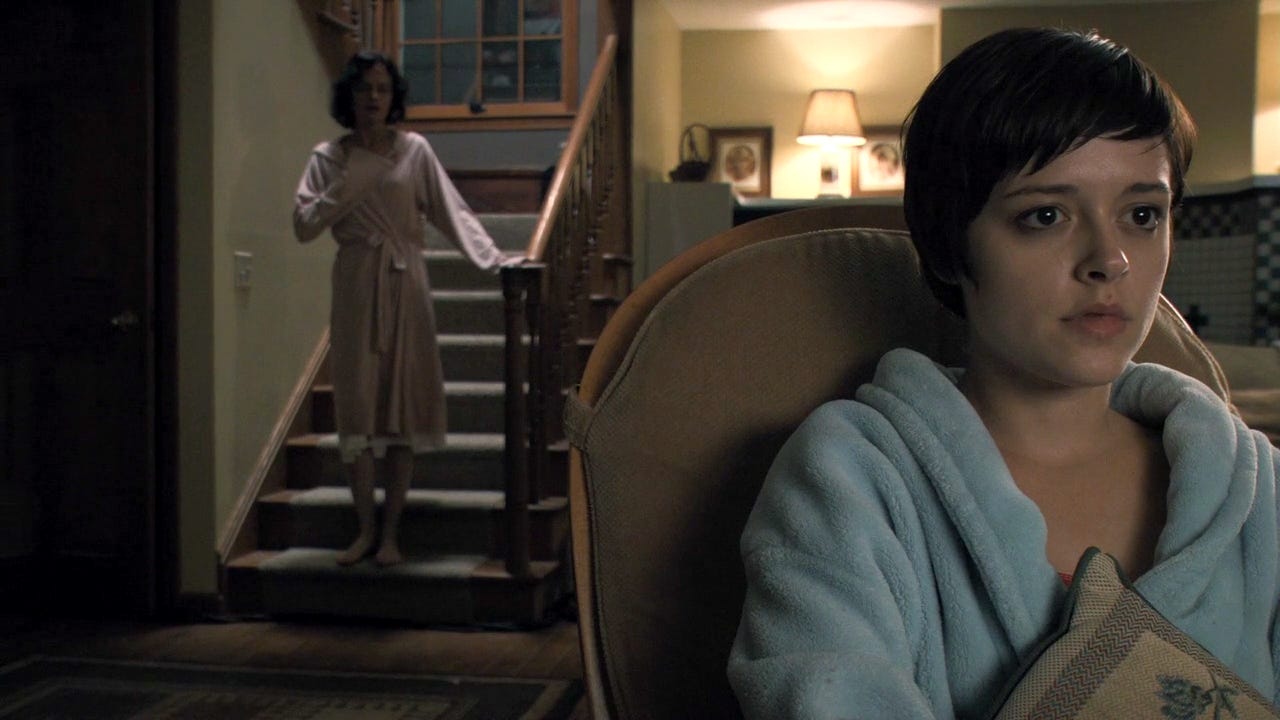
LAC: I think it’s a combination. I definitely have had scripts sent to me that are too close to something I’ve done and lacking the depth. I did this movie called Rising Stars, which is like a family movie with producer Andrew van den Houten, and he’s the one who introduced me to Lucky McKee. I was a huge Lucky McKee fan because May is one of my favorite movies. I knew they were working on another movie together, so he introduced me to Lucky - I was very fortunate Lucky trusted me even though he didn’t know me. We had conversations about film and the script and he gave me a chance. After The Woman was such a success in the indie world, it opened up some doors for me. People started asking (about me) who is she, what is she doing? It was a smaller role but there was some interest. Then Chad (Crawford Kinkle) wanted me for Jug Face. I read that script and really, really loved it. I sat at the table and went through it and I could relate to it in many ways because of where I’m from - the desperation and lack of education. It was something I really wanted to do, especially when I found out Sean Bridgers was in it, who is one of my favorite actors. I didn’t really get a chance to work with him on The Woman that often, so I was ecstatic to get to work with him on a much more frequent basis and closer context. After that, Mickey Keating was interning with Larry Fessenden and found this production company Illium Pictures that I work through. He wanted to find an actress out of New York and he had seen my work in Jug Face. He trusted me and hired me for that.
CH: You’ve done a little comedy and have gone outside of horror, but are you drawn to darker material in general? Is that where you prefer to work?
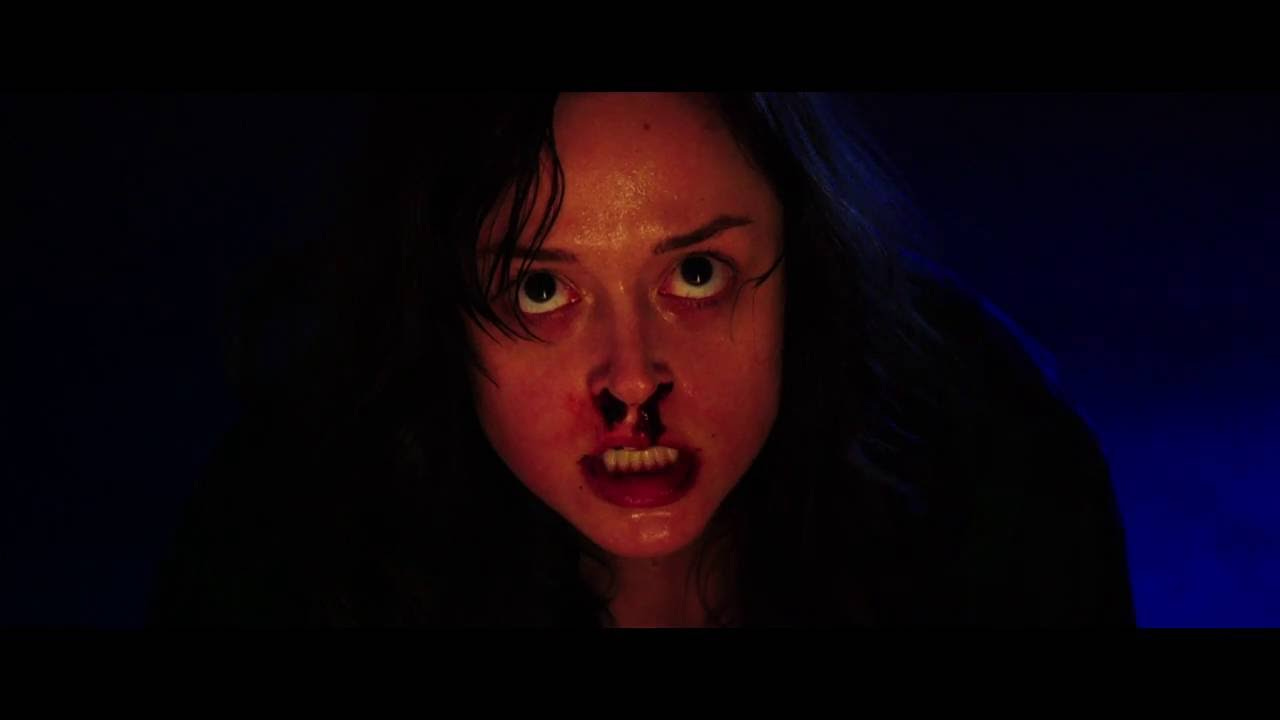
LAC: I don’t ever want to repeat something, which when you stay in one genre too long, it can happen. I love comedy, and when I do theater, I only do comedy for the most part. I don’t think I’ve been cast in a drama for a very long time in theater. I would love to do more comedy on film. I’ve never done it and I don’t know how exhausting that would be, to try that take after take. I’d love the challenge of it. I had a good time doing The Mind’s Eye with Joe Begos because there’s a little bit of action in it, a little more than I’ve ever had before. That would be something I’d love to do as well. I don’t get exhausted with it, I just don’t want to be repetitive within myself more than anything.
CH: There’s an evolution of your characters from The Woman to Jug Face to Pod - these are progressively empowered women. Is that something you shape as you’re creating the characters or are screenwriters noting your own increasing power as your career moves forward and crafting these roles toward that growth?
LAC: It’s definitely been in the scripts and that is what I’m gravitating towards, for sure. I think as I’m getting older, I’m feeling more confident, but that also stems from having zero confidence whatsoever. It just happens to be that way, I think. There’s also times where I see something that makes my eye twitch a little bit that isn’t so accurate - we can have discussions about them. Luckily, every director I’ve worked with has been open to those discussions and very happy to facilitate them and to make these women as three dimensional as possible.
CH: You work a lot with Mickey Keating who appears a very precise and exacting director. Did you ever have any friction in creating a character, or does he give you quite a bit of leeway?
LAC: As far as character goes, there’s a ton of leeway. He’s very exact and precise in the shots and setups and composition, for sure - there’s no discussion that that’s how those are going to happen. Within the scenes, like when we did Pod, there’s a really long kitchen scene between the three siblings, and that was really free - he wanted it to play out like a stage play, however we wanted to do it. Of course, it was very difficult to do that in the end because the lighting was so dim in that room, so you have to figure out where you’re going to stand. He’s very free about the character. We developed Darling together over the phone while he was in New York and I was in L.A. Once I got there, he really let me run loose.
CH: Has the landscape changed at all for women creators since you first began vs. where you are now? Have you noticed any significant changes?
LAC: The biggest change I’m seeing is people talking about it and people being upset about it, which is always where it starts. These conversations haven’t stopped, they have been continuing amongst women and the men that care. I think also that a lot of women when I started were production assistants or script supervisors are now in positions of power and they worked very hard to get there. These are younger women in their early to late twenties and I think this has been happening at many levels in many places. I see it as seeds, these wonderful women are seeds that have been planted, and in time, they’re going to have more power. Hopefully they all remember why they started this and what they want to do with that power.
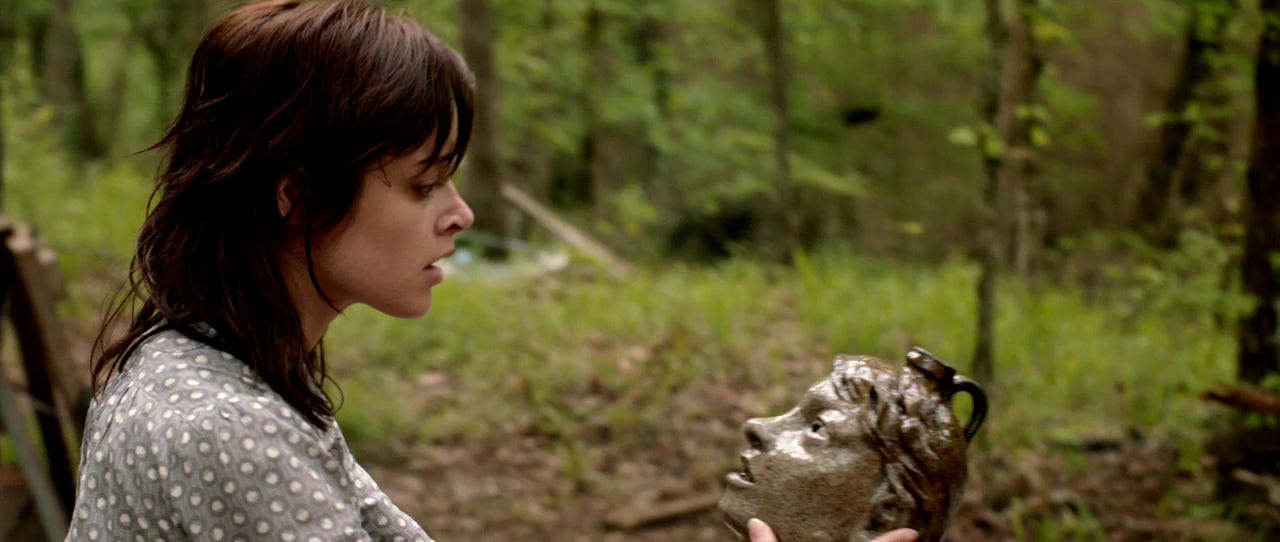
CH: There’s a lot to draw upon todays political and social climate from Jug Face and The Woman. How frightening is it to have a presidential administration comprised of Chris Cleek’s?
LAC: Very well said! We just have to find The Woman - see what Pollyanna’s up to, see if she’s hungry, I guess!
CH: What was your most intense experience on set?
LAC: Making indie films, there’s always a gem from every single one. Like I said, the conditions are never good. The Woman was probably the most pleasant for me because I was mostly inside. With Jug Face, we had ticks - the worst year for ticks Tennessee had ever seen. People were getting bitten all day long. I put so much DEET on that my hair started falling out! My costumes were just being eaten by the DEET! All of the scenes in Jug Face were really difficult, and Chad, the director, had tried to mix up the script so every day we were shooting all over the script. It was difficult for me to get in the right headspace with everything because we were shooting so out of order. Sometimes I’d be shooting a scene after something intense that we hadn’t shot yet, so in my mind I had to imagine what I’m going to be like after that scene to inform this moment here. Sean Bridgers was so helpful, he’d go over the script with me every day. He’s like my glorified acting coach and I don’t think I’d have been able to do it without him. You’re doing these scenes, and Larry Fessenden is just the funniest guy, he’s such a sweetheart - he’s having to whip my back, and right before we’re joking, laughing, talking about lunch. Then they’re stringing me up to these hooks! In that context, if you don’t have your privacy on indie films, you don’t have space, you don’t have time. That was probably my most challenging, and it definitely helped me and made me a better performer. After that I knew what I needed to be and what I needed around me - it informed a lot for me.
CH: Have you been transformed by your own characters, or did they already exist within you?
LAC: I think that there are pieces that are definitely there. It’s funny, it can be cathartic in a way, especially for Peggy in The Woman - I don’t think that I’ll ever go back there again. I don’t think that I’ll need to - the vulnerability and the abuse. I think the other characters you’re working with are so helpful; these ensemble pieces feel so easy because you have a whole family to rely on and you build your own stories. It’s very easy to become someone else because you’re curious about who they are in your relationship with them. With something like Darling where it’s just me, that’s a little more difficult because you don’t really have anyone to anchor yourself. Luckily, she didn’t need to be anchored, so that was helpful. It can be very lonely without any other acting partners.
CH: What do you have coming up?
LAC: Imitation Girl, directed by Natasha Karmani, is coming up in the next few months. It’s going to be at CineQuest Festival. It’s a sci-fi drama and I play two characters in that, Juliana, a struggling performer in New York City, and her imitation which is an alien lady. I’m raising money right now for Love Shy which is a drama my friends wrote out in L.A. and we’ll be shooting in our home town in Ohio. I’m writing my horror novel, and we have another script in the works which is a medieval demon film. These are coming up around the corner.